
Tom was 63 and had a history of lower-back and right sacroiliac joint discomfort, quadratus lumborum spasms, neck discomfort, and left shoulder discomfort.
His Individualized Care Plan
Tom’s plan included one visit per week for 26 weeks, with a reassessment every 12 visits. His care primarily included spinal adjustments and specific stretches.
A Measurable Change
Tom’s measured pelvic unleveling changed from 12.37 mm on January 6, 2026, to 4.87 mm on July 27, 2026.
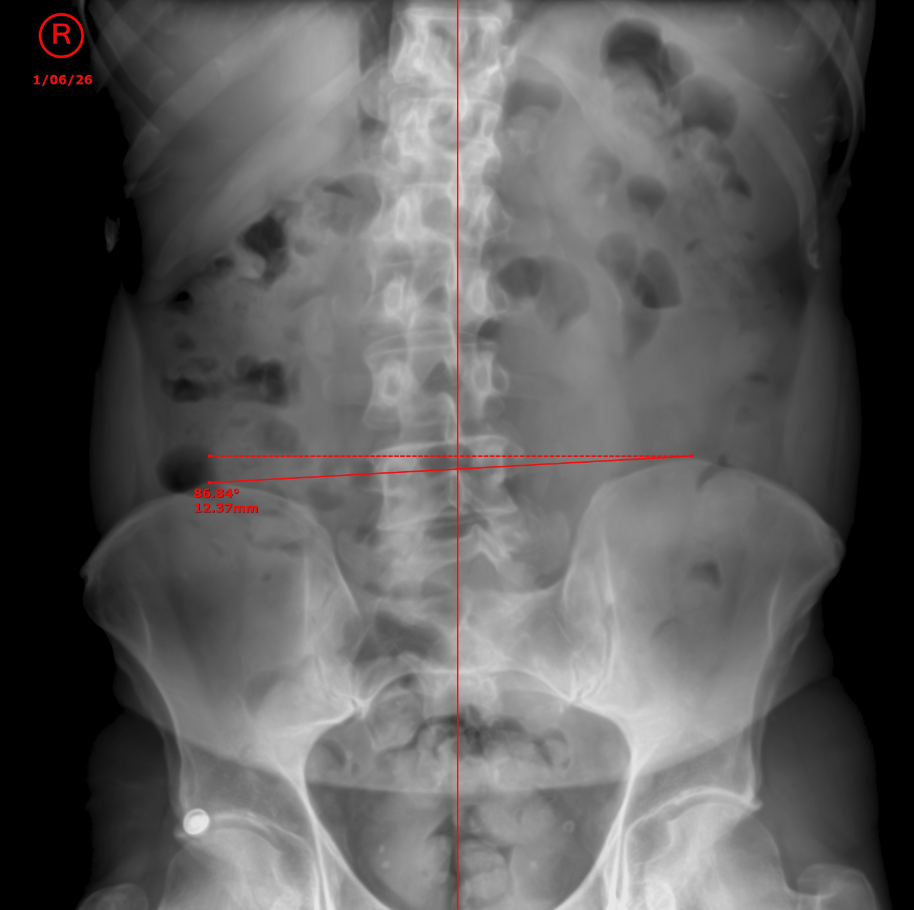
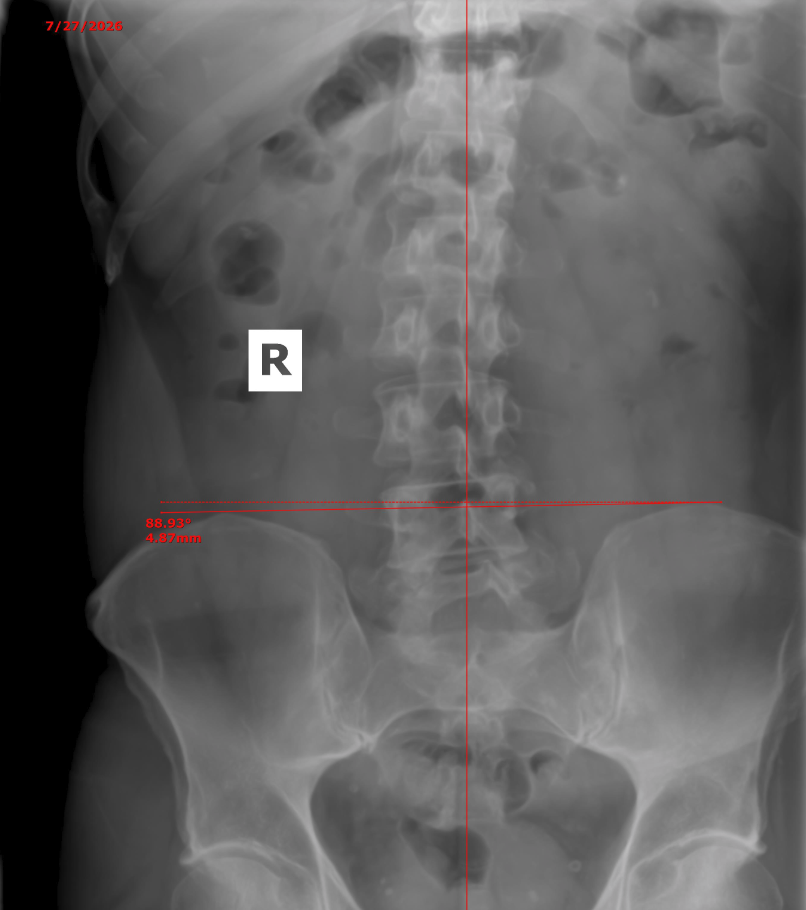
Measuring Progress Over Time
Tom’s reassessments gave his doctor a consistent way to compare his initial findings with his progress during care.
What Is Pelvic Unleveling?
Pelvic unleveling describes a measurable difference in height between the left and right sides of the pelvis, often assessed on a standing X-ray. When the pelvis sits unevenly, the spine above it may compensate, which can be associated with lower-back, hip, or sacroiliac (SI) joint discomfort and muscle tension such as quadratus lumborum spasms.
The Sacroiliac Joint and Quadratus Lumborum
The SI joints connect the sacrum to the pelvis and help transfer weight between the upper body and legs. The quadratus lumborum (QL) is a deep lower-back muscle that helps stabilize the pelvis and spine. When the pelvis is uneven, these structures may work harder, which is why the Compass team looks at the whole picture rather than a single symptom.
Why a Once-Weekly Plan Can Work
Not every care plan needs frequent visits. Depending on a patient’s findings, schedule, and goals, a consistent once-per-week plan over a longer period may be recommended. What matters most is consistency, home support, and objective reassessments.
- Specific spinal adjustments focused on pelvic and spinal balance.
- Targeted stretches to support flexibility and muscular balance.
- Reassessments every 12 visits to compare measurements.
Staying Active in Your 60s and Beyond
For many active adults in Dunwoody and North Atlanta, staying on the golf course, pickleball court, or hiking trail is a big goal. Supporting balanced posture and mobility is part of helping families flourish at every stage of life.
Frequently Asked Questions
Do I need X-rays to start care? Not always. Imaging is recommended when clinically appropriate based on your history and exam findings.
How long will my care plan be? Every plan is individualized. Your doctor will explain the recommended frequency, duration, and reassessment schedule during your report of findings.
Where is Compass Family Chiropractic? We serve families in Dunwoody, GA and the greater North Atlanta area. Start your new patient journey online to request your first visit.
This real Compass patient example is educational and does not promise the same outcome for every patient. Results and recommended care vary.
Ready to experience the difference chiropractic care can make?
Start Your New Patient Journey