Is SoftWave the same thing as shockwave therapy?
Yes. SoftWave is a brand of shockwave therapy. It is not a separate category of treatment — it is one particular type of shockwave technology, so when you search for shockwave therapy in Dunwoody, SoftWave is what our office provides.
What type of shockwave therapy is SoftWave?
SoftWave is described by its manufacturer as broad-focused shockwave therapy. It produces true acoustic shock waves and spreads their energy across a wider treatment area than a tightly focused system.
Is SoftWave radial shockwave therapy?
No. Radial devices create pressure waves at the skin surface that lose energy as they travel deeper. SoftWave generates a true shock wave and delivers it across a broad area, which is a different mechanism than radial pressure-wave devices.
What is broad-focused shockwave therapy?
Broad-focused shockwave therapy delivers true acoustic shock waves over a wider treatment zone rather than concentrating them at a single small point. The intent is to reach a larger volume of tissue in one session while keeping the treatment comfortable.
How is SoftWave different from traditional shockwave therapy?
Most older systems are either radial (surface pressure waves) or tightly focused (a small, intense treatment point). SoftWave sits between those two — a true shock wave delivered broadly. Practically, that usually means no numbing agents, no gel-heavy pinpointing, and short sessions.
Does shockwave therapy hurt?
Most people describe it as a firm tapping or thumping sensation. It can be tender over an irritated area, and your provider can adjust the intensity during the session. It is non-invasive, requires no anesthesia, and there is no recovery downtime.
How long does a SoftWave session take?
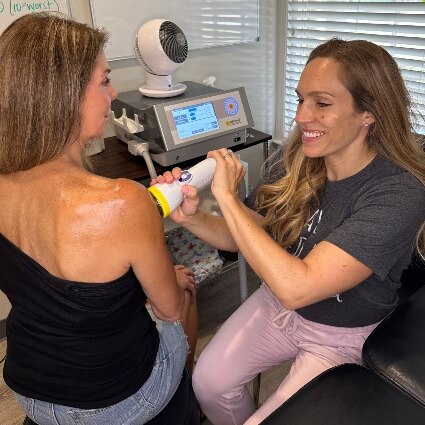
A treatment session is typically about 10 minutes. Your first visit is longer — roughly 30 minutes — because it includes a consultation and a mapping session using biofeedback to locate the tissue that needs attention.
How many SoftWave treatments do people typically receive?
It depends on the tissue involved, how long the problem has been there, and your goals. Care plans are commonly delivered as a series of sessions spaced over several weeks. We give you a specific recommendation after your evaluation rather than a one-size-fits-all package.
What conditions do chiropractors use shockwave therapy for?
Commonly plantar fasciitis, Achilles tendon problems, knee pain, shoulder problems, tennis and golfer's elbow, hip pain, wrist and hand pain, and stubborn chronic back and neck pain that has not responded to other conservative care.
Who should not receive shockwave therapy?
Shockwave is generally avoided during pregnancy, over open growth plates in children, over tumors or active infections, in people with blood-clotting disorders or on blood thinners, and directly over implanted devices. We screen for these during your evaluation and will tell you honestly if you are not a good candidate.
How much does shockwave therapy cost in Dunwoody?
Cost depends on how many sessions your case calls for, so we quote it after the evaluation rather than before. Call our Dunwoody office at (770) 452-0022 and we will walk you through current pricing and consultation options.
Is shockwave therapy covered by insurance?
Most insurance plans do not currently cover shockwave therapy, so it is usually paid out of pocket. Coverage varies by plan, and HSA or FSA funds can often be used. Ask our team and we will help you check.