
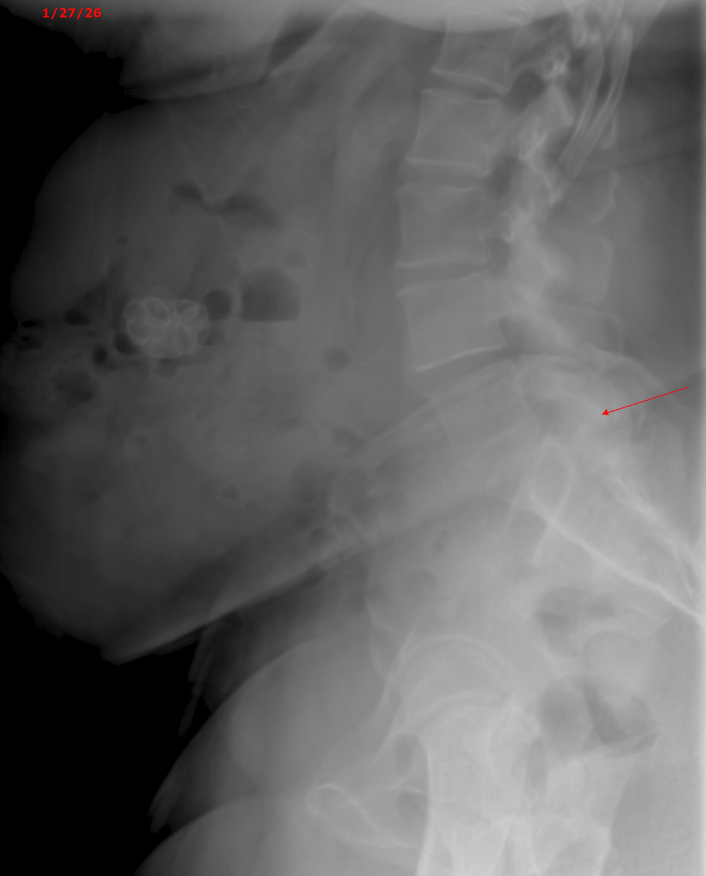
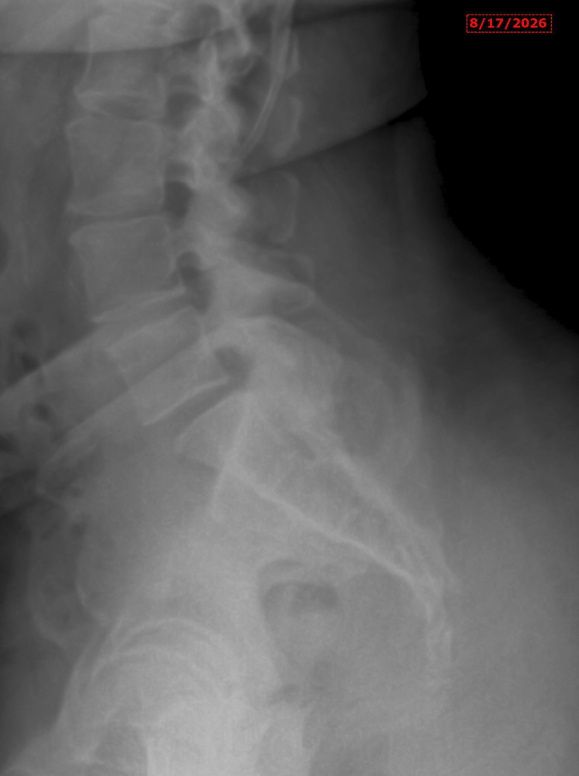
Trisha was 56 and had a history of neck and back discomfort. Her initial imaging showed posterior disc wedging at L5–S1.
Her Individualized Care Plan
Trisha’s plan included three visits per week for four weeks and then two visits per week for 12 weeks, with a reassessment every 12 visits. Care primarily consisted of spinal adjustments and specific stretches.
What Follow-Up Imaging Showed
Follow-up imaging documented increased space at L5–S1 after care.
Looking Beyond Symptoms
Exam findings and follow-up imaging can help create a fuller picture of structural change over time. They also help our doctors explain what they see in clear, practical terms.
What Is L5–S1?
L5–S1 is the junction between the last lumbar vertebra (L5) and the top of the sacrum (S1). It sits at the base of the lower back and handles a significant amount of load from sitting, standing, lifting, and bending. Because of this, it’s one of the most commonly discussed areas when people talk about lower-back discomfort.
What Does Posterior Disc Wedging Mean?
Spinal discs sit between the vertebrae and act as spacers and shock absorbers. On imaging, a disc space that appears narrower toward the back than the front is often described as posterior wedging. Doctors use imaging like this to better understand the structure of the lower back and to set a baseline for comparison over time.
How Compass Approaches Lower-Back Care
- A detailed history of when discomfort started and what makes it better or worse.
- Orthopedic, neurological, and postural examination.
- Imaging when appropriate to document structural findings.
- Specific chiropractic adjustments paired with targeted stretches.
- Reassessments every 12 visits to measure progress objectively.
Everyday Habits That Support the Lower Back
Take regular breaks from prolonged sitting, lift with your legs rather than your back, stay hydrated, and build core and hip strength over time. Small, consistent habits can make a meaningful difference in how your back feels day to day.
If you’re in Dunwoody, Sandy Springs, Brookhaven, or nearby and dealing with ongoing lower-back discomfort, a thorough chiropractic evaluation can help you understand what’s going on and what options are available.
Frequently Asked Questions
Do I need X-rays to start care? Not always. Imaging is recommended when clinically appropriate based on your history and exam findings.
How long will my care plan be? Every plan is individualized. Your doctor will explain the recommended frequency, duration, and reassessment schedule during your report of findings.
Where is Compass Family Chiropractic? We serve families in Dunwoody, GA and the greater North Atlanta area. Start your new patient journey online to request your first visit.
This real Compass patient example is educational and does not promise the same outcome for every patient. Results and recommended care vary.
Ready to experience the difference chiropractic care can make?
Start Your New Patient Journey