Shockwave Therapy for Plantar Fasciitis in Dunwoody
That first step out of bed in the morning tells you everything. If heel pain has outlasted stretching, inserts, and rest, shockwave therapy is one of the non-surgical options worth evaluating — and at Compass Family Chiropractic in Dunwoody, the shockwave technology we use is SoftWave.
Plantar fasciitis is one of the most common reasons people search for shockwave therapy. The plantar fascia is dense connective tissue with a modest blood supply, which is part of why it can stay irritated for months even when you are doing everything right.
Shockwave therapy is a mechanical stimulus, not a painkiller. The goal is to prompt a healing response in tissue that has stalled, rather than to mask the symptom while the underlying problem stays the same.
Sharp heel pain with the first steps of the morning
Pain that returns after standing or walking for long stretches
Tenderness at the front of the heel bone
Heel pain that has not resolved with rest, inserts, or stretching
How SoftWave Fits Into the Shockwave Category
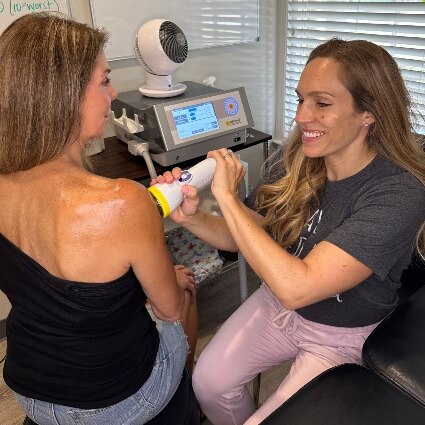
SoftWave is a broad-focused shockwave device. Instead of concentrating energy on a single pinpoint or delivering surface-level pressure waves like a radial unit, it spreads a true shock wave across a wider zone of tissue.
For a broad structure like the plantar fascia and the surrounding heel, that wider treatment area is a practical advantage — and it means sessions are typically well tolerated without numbing.
What the Evaluation Looks Like
Your first visit lasts about 30 minutes. It includes a consultation, a hands-on exam, and a mapping session that uses biofeedback to locate the tissue that is actually irritated — which is not always where you feel the pain. We have an onsite digital X-ray suite if imaging is warranted.
At the follow-up we review what we found and give you a specific recommendation: how many sessions, how often, and what else (chiropractic care, decompression, movement work) belongs alongside it. Treatment sessions themselves usually take about 10 minutes.
Who Is — and Isn't — a Candidate
Shockwave therapy is worth evaluating when heel pain has persisted despite rest, stretching, or other conservative care, and when the tissue involved is one that responds to a regenerative stimulus.
It is generally not appropriate during pregnancy, over open growth plates, over tumors or active infections, for people with clotting disorders or on blood thinners, or directly over implanted devices. If you are not a good fit, we will tell you and point you toward the care that makes more sense.
What the Research Says
Extracorporeal shock wave therapy (ESWT) has been studied across tendon and soft-tissue conditions for more than two decades, and the SoftWave device carries FDA clearance in the United States. Published results vary by condition, device type, and protocol.
We will not promise you an outcome. What we can do is examine you, explain honestly whether the evidence supports trying shockwave for your particular problem, and measure whether it is working as we go.
Schedule an Evaluation in Dunwoody
The first step is finding out whether your heel pain is actually a plantar fascia problem — and whether shockwave is the right tool for it. Call us at (770) 452-0022 or request an appointment online.
Common Questions
Is SoftWave the same thing as shockwave therapy?
Yes. SoftWave is a brand of shockwave therapy. It is not a separate category of treatment — it is one particular type of shockwave technology, so when you search for shockwave therapy in Dunwoody, SoftWave is what our office provides.
Does shockwave therapy hurt?
Most people describe it as a firm tapping or thumping sensation. It can be tender over an irritated area, and your provider can adjust the intensity during the session. It is non-invasive, requires no anesthesia, and there is no recovery downtime.
How long does a SoftWave session take?
A treatment session is typically about 10 minutes. Your first visit is longer — roughly 30 minutes — because it includes a consultation and a mapping session using biofeedback to locate the tissue that needs attention.
How many SoftWave treatments do people typically receive?
It depends on the tissue involved, how long the problem has been there, and your goals. Care plans are commonly delivered as a series of sessions spaced over several weeks. We give you a specific recommendation after your evaluation rather than a one-size-fits-all package.
Who should not receive shockwave therapy?
Shockwave is generally avoided during pregnancy, over open growth plates in children, over tumors or active infections, in people with blood-clotting disorders or on blood thinners, and directly over implanted devices. We screen for these during your evaluation and will tell you honestly if you are not a good candidate.